Old Dog, New Tricks: Why Your Aging Tegra Flagship Still Beats the Budget Phone Crowd
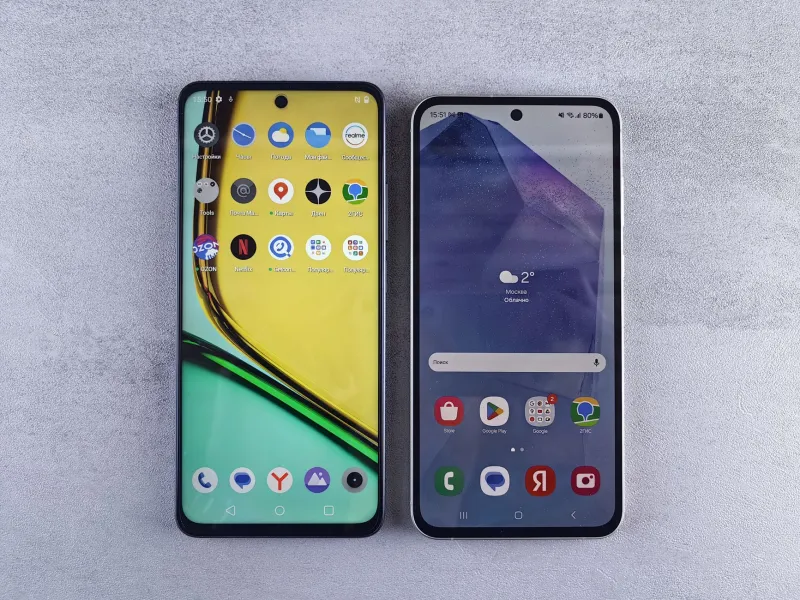
There's a conversation that keeps popping up in forums, Discord servers, and comment sections across the Tegra community. Someone mentions they're still rocking a five-year-old device, a newer user suggests it's time to upgrade, and then the benchmarks come out. Suddenly, that "ancient" piece of hardware is trading blows — or winning outright — against phones that dropped six months ago. It's a weird situation, and it's one that deserves a proper explanation.
So what exactly is going on here? Why does the typical smartphone replacement logic — buy new, get better — seem to break down when Tegra devices enter the conversation?
The Budget Phone Trap Nobody Talks About
Here's the thing about the modern budget smartphone market: manufacturers are playing a different game than NVIDIA was when they designed Tegra silicon. A $200 Android phone in 2024 is built around cost optimization at every layer. The processor is chosen to hit a price point, the memory is often the bare minimum to run the OS smoothly, and the GPU is frequently an afterthought — just powerful enough to handle the marketing screenshots.
Tegra flagships, by contrast, were engineered from the ground up around GPU performance. NVIDIA wasn't making a phone chip; they were putting a scaled-down GeForce into a mobile package. That architectural DNA matters more than raw clock speeds or core counts on a spec sheet.
When you're comparing a five-year-old Tegra device against a brand-new $179 Android phone, you're not really comparing old versus new. You're comparing two completely different philosophies of what mobile hardware should do.
Architecture Ages Differently Depending on What It Was Built For
Tegra's Pascal and Maxwell architectures were designed with a specific workload in mind: serious graphical throughput in a thermally constrained environment. NVIDIA had decades of GPU design experience to draw from, and it shows in how gracefully that hardware handles sustained workloads.
Budget SoCs from MediaTek or lower-tier Snapdragon lines are often optimized for burst performance — they look great in a 30-second benchmark but throttle aggressively under sustained load. Tegra devices, particularly those with decent cooling solutions, maintain performance over longer sessions in ways that budget alternatives simply can't match.
For gaming, streaming, or any task that keeps the hardware working hard for more than a few minutes, that sustained performance gap becomes very real, very fast. A 3DMark score is one thing. Forty-five minutes into a demanding game session is another story entirely.
Driver Support: The Invisible Advantage
This is where NVIDIA's desktop GPU heritage pays dividends in a way that's easy to overlook. Driver support for Tegra devices has been remarkably consistent compared to what you'd typically expect from a five-year-old mobile chip. NVIDIA has continued pushing optimizations, compatibility updates, and performance improvements long after competitors would have moved on.
Most budget Android devices are lucky to see two years of meaningful software support. After that, you're on your own — stuck with whatever performance the launch firmware delivered, with no path to improvement. Tegra owners have watched their devices actually get better over time through driver-level optimizations that squeeze more out of the same silicon.
That's not a small thing. In practical terms, it means a Tegra device from 2019 running current software can outperform a budget phone from 2023 that's already been abandoned by its manufacturer.
Real-World Comparisons That Tell the Actual Story
Let's get concrete for a second. Take something like the Nintendo Switch — arguably the most famous Tegra device in American homes — and stack it up against what a similarly priced budget Android gaming device delivers today. The Switch's Tegra X1 (and X1+ in newer models) continues to handle titles that would bring budget competition to its knees.
Or look at Shield TV owners who have been running the same hardware for years while watching streaming services, playing Android games, and using their device as a media hub. The Tegra X1 in those boxes is still getting updates, still handling 4K HDR content, and still outperforming budget streaming sticks that launched more recently.
The pattern repeats across the Tegra ecosystem. Older hardware, properly maintained and running current software, consistently punches above what its age would suggest.
Why the Replacement Cycle Doesn't Apply Here
The smartphone industry runs on a pretty aggressive upgrade treadmill. Manufacturers and carriers have a shared interest in getting you into new hardware every two to three years. The marketing around "new" is relentless, and for most mainstream Android devices, the pressure is real — older hardware genuinely does fall behind.
Tegra breaks that model for a few reasons stacked on top of each other. The architectural headroom built into flagship Tegra designs means the hardware wasn't barely keeping up on day one. The sustained driver support means software hasn't left the hardware behind. And the budget tier it's being compared against was never designed to compete at the level Tegra was built for.
For Tegra owners, upgrading often means spending significantly more money to get meaningfully better performance — because the budget alternatives genuinely aren't better in the ways that matter. That's a very different calculus than the typical smartphone upgrade conversation.
So When Does an Upgrade Actually Make Sense?
None of this means Tegra hardware is immortal. There are legitimate reasons to consider new hardware eventually. If your use case has shifted dramatically — say you're now doing serious video editing or running applications that demand newer API support — older Tegra silicon will hit walls. Battery degradation is real and unavoidable. And eventually, software support does wind down even for well-supported hardware.
But if your primary use cases are gaming, streaming, and general media consumption? The honest answer is that many Tegra owners are going to keep asking "why upgrade?" for longer than anyone in the mainstream tech press would predict. And based on the performance data, that's a completely reasonable question to be asking.
The Tegra longevity story isn't really a paradox once you understand what the hardware was built to do. It just looks like one when you're used to a market where "older" almost always means "worse." In the Tegra world, that assumption doesn't always hold — and that's worth understanding before you let anyone talk you into an upgrade you might not actually need.