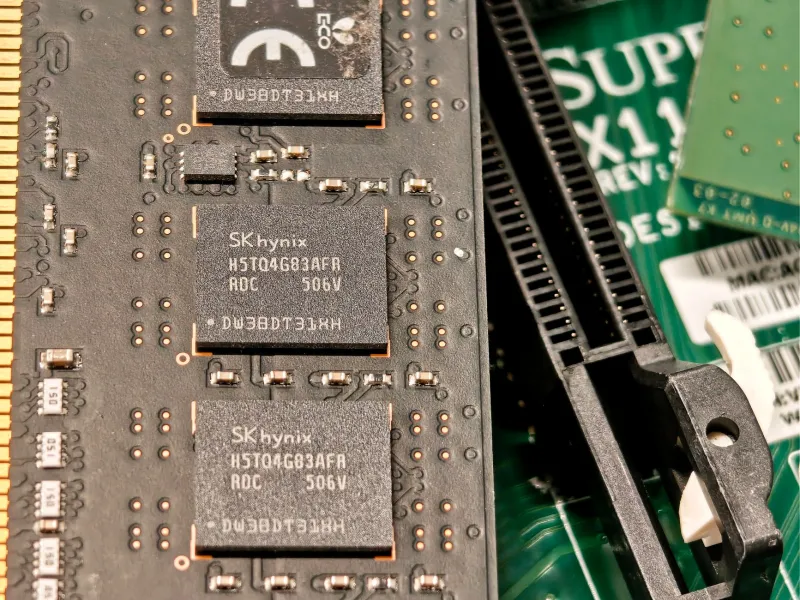
Same Box, Different Beast: How Silicon Lottery Affects Your Tegra Before You Even Turn It On
Picture this: you and a buddy both grab the same Tegra-powered device — same SKU, same retailer, same week. You swap notes a month later and his runs cooler, scores higher in benchmarks, and seems to handle demanding games with a little more headroom. You're not imagining things, and neither is he. Welcome to the silicon lottery, one of the least-talked-about realities in consumer hardware.
This isn't a conspiracy. It's physics, manufacturing economics, and a little bit of luck all colliding at the nanometer scale.
What Actually Happens Inside a Fab
Every Tegra chip starts life as a wafer — a thin disc of silicon etched with billions of transistors using photolithography. Even with the most advanced equipment on the planet, the process isn't perfectly uniform. Tiny imperfections in the silicon crystal structure, microscopic variations in dopant concentrations, and even temperature gradients across the wafer mean that no two dies are exactly identical.
Chipmakers like NVIDIA know this going in. That's why they test every die after fabrication — a process called binning. Dies that hit the highest performance and power efficiency targets get labeled as top-tier parts. Those that fall short get sold as lower-spec SKUs, or sometimes disabled cores and lower clock ceilings get baked in to match a cheaper product tier.
Here's where it gets interesting for Tegra owners: within a single SKU, there's still variance. Not all chips that pass the same bin threshold are equal. Some sit near the top of the acceptable range. Others barely squeaked through. NVIDIA isn't going to reject a chip that technically meets spec just because it runs a few milliwatts hotter or needs a slightly higher voltage to hit its rated clock. That chip still gets packaged and shipped.
Why Identical Tegra Devices Feel Different
The practical result is that two Switch OLED units, two Shield TV Pros, or two of any Tegra-based device can have meaningfully different real-world behavior even though they're spec-identical on paper.
The differences usually show up in a few specific ways:
Thermal behavior is often the most noticeable. A chip that needs more voltage to maintain its rated frequency generates more heat doing the same workload. In a thermally constrained device — which most Tegra hardware is — that translates directly into earlier thermal throttling. Your device hits its temperature ceiling faster and backs off the clocks sooner. The end result is inconsistent frame rates and sluggish performance during sustained loads, even though nothing is technically "broken."
Sustained clock speeds tell a similar story. Under a long benchmark or an extended gaming session, a chip on the lower end of its bin may drift down to lower average clocks compared to a luckier sample. Short burst performance might look identical, but anything requiring consistent output over several minutes will expose the gap.
Power draw is another tell. Higher-voltage chips pull more watts to do the same work, which shortens battery life on portable Tegra devices and can accelerate wear on power delivery components over years of use.
Is This a Quality Control Problem?
Honestly? Not really — at least not in the traditional sense. Every chip that ships meets its rated specification. From a warranty and consumer protection standpoint, you got what you paid for. The variance exists within defined tolerances, and those tolerances exist because demanding zero variance would make chips prohibitively expensive or virtually impossible to manufacture at scale.
What it is, though, is a reality that reviewers rarely account for. A tech publication that tests one unit and declares a device's thermal performance or sustained benchmark score as definitive is only telling you about that one sample. Their unit might have been a golden chip. Or a mediocre one. You have no way of knowing.
How to Actually Test Your Luck
The good news is you don't have to just wonder. There are real ways to assess where your Tegra device landed in the lottery.
Run a sustained benchmark, not just a quick one. Tools like 3DMark's stress test or extended loops in emulators are far more revealing than a single benchmark pass. A strong chip will hold its peak clocks longer before thermal management kicks in. Watch for clock speed drops using a monitoring overlay if your device or OS supports it.
Check voltage and clock data directly. On Android-based Tegra devices, apps like CPU-Z, AIDA64, or device-specific monitoring tools can show you real-time clock speeds and sometimes voltage behavior. On the Nintendo Switch, homebrew tools available through the modding community (if you're running custom firmware) give you detailed hardware telemetry that Nintendo's stock software never exposes.
Thermal stress testing is blunt but effective. Run a demanding game or benchmark for 20-30 minutes and monitor surface temperatures with an infrared thermometer if you have one. Compare your results to community benchmarks from multiple users. If your device consistently runs hotter or throttles earlier than the median reported experience, you likely drew a chip that needs more voltage to perform.
Battery drain under load is an indirect but accessible indicator. Higher power draw chips will discharge faster during identical workloads. If your battery percentage drops noticeably faster than other owners report under the same conditions, that's a signal worth paying attention to.
What You Can Do About It
If you discover you've got a chip on the lower end of the variance range, it's not all doom and gloom. A few strategies can help close the gap.
Keep your device cool. Thermal headroom is everything on Tegra hardware. Better airflow, avoiding gaming on soft surfaces that block vents, and even aftermarket cooling solutions for devices like the Shield TV can meaningfully delay throttling and let your chip operate closer to its ceiling for longer.
For Android-based Tegra devices, custom governor profiles and undervolting (where supported) can reduce the voltage your chip needs to hit a given clock speed, cutting heat and power draw. It's worth noting that undervolting headroom varies — a chip already running lean on voltage won't have much room to go lower, while a chip that was shipped with conservative voltage margins may respond dramatically well.
Finally, if your device is brand new and within return window, and your testing reveals genuinely poor thermal performance compared to community norms, exchanging it is a legitimate option. It's not guaranteed you'll get a better sample, but statistically, most chips cluster near the middle of the distribution — you're unlikely to get the worst of the worst twice in a row.
The Bottom Line
The silicon lottery isn't a bug in the system — it's an unavoidable feature of how semiconductor manufacturing works at scale. Two identical Tegra devices can absolutely perform differently, run cooler or hotter, and age at different rates, all without either one being defective. Understanding that reality puts you ahead of the majority of owners who never think to question why their experience differs from what a review said to expect.
Test your hardware. Know what you've got. And if you landed a golden chip, enjoy it — you earned it.